

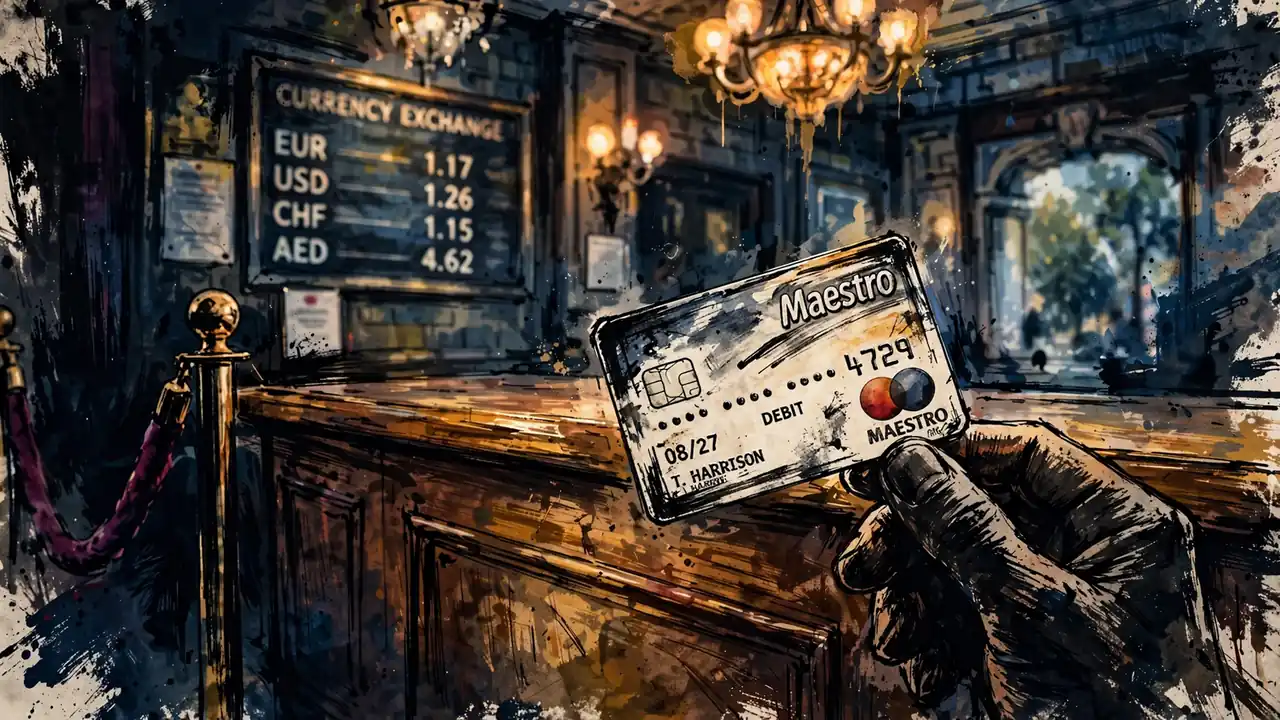
Maestro availability depends on the casino cashier; the guide also explains alternatives, withdrawals, costs, bonuses and safeguards.
Maestro at UK Casinos: Availability Is a Cashier Question
Searching for casinos that accept Maestro in the UK can produce a long list of familiar payment brands, but a list is not the same thing as a working deposit route. Maestro acceptance has to be established at the individual casino’s cashier, at the time the deposit is being made. A payment page may display general card funding while the particular Maestro product is unavailable, restricted, or no longer supported.
That distinction matters because debit-card acceptance is a broad category. UK casinos commonly accept debit cards, with Visa and Mastercard among the brands frequently shown in payment information. It does not follow that every debit card bearing a different network logo will be eligible. A casino can accept debit cards in general while declining a specific card scheme, issuer, or card product. “Debit card accepted” is therefore not a reliable translation of “Maestro accepted”.
What the cashier can confirm
The cashier is the most useful place to check because it reflects the payment routes attached to that account and site. The relevant question is not whether the casino has ever mentioned cards, but whether Maestro appears as an available method when the deposit options are displayed.
A careful check separates three things:
- whether card deposits are offered at all;
- whether Maestro is named separately from other card brands;
- whether the method is available for the particular account and transaction.
Visa and Mastercard logos may be visible even when Maestro is not. Conversely, a general reference to bank-card deposits may be too vague to establish eligibility. The card brand should be identified expressly rather than inferred from the presence of another debit-card logo.
The cashier should also be checked after signing in, not only on a public payment-information page. Account location, currency, verification status and payment arrangements can affect what is displayed. A public page may describe the casino’s wider payment menu, while the logged-in cashier presents the methods currently available to a particular customer. The latter is the more practical test.
This is a modest task, but it prevents a familiar mistake: treating an old payment table as a present promise. Payment arrangements change, and a card logo can remain in an article or image after the underlying route has changed. A specialist review may list Visa and Mastercard and still leave current UK availability and the eligibility of an individual card product to be confirmed in the cashier. The cashier, not the decorative logo, has the final word.
How to verify a Maestro deposit route
A sensible check can be made before money is sent:
- Open the casino’s deposit cashier after creating or accessing the account.
- Read the named card methods rather than relying on the general word “cards”.
- Look for Maestro specifically, and check whether it is available for a deposit in GBP.
- Review any method-specific instructions or restrictions shown beside the option.
- If the label is unclear, ask the casino’s support team whether the exact Maestro card can be used.
The purpose is not to collect every casino that has ever been associated with Maestro. It is to establish whether a particular site accepts that card now. That is why claims about the “best” Maestro casinos, new sites, or a complete list of all Maestro casinos in the UK should be treated carefully unless the individual cashier has been checked. Rankings may compare welcome offers or games, but neither comparison proves that a Maestro deposit will be enabled.
The same principle applies when the search is framed around an Android casino. A phone or tablet may display the same account cashier, but the device does not turn an unsupported card product into a supported one. The payment decision belongs to the casino account and its cashier, not to the handset used to open it. Mobile access changes the screen; it does not settle the card question.
Card acceptance is not account approval
Even where Maestro is displayed, the deposit still belongs to a real-money gambling account subject to the operator’s checks. Remote gambling licensees must verify age before allowing a customer to deposit funds. The account details and the payment route should also belong to the same customer. Matching ownership information reduces avoidable friction when a transaction is reviewed.
DO
- Check the casino cashier to confirm Maestro is available for GBP deposits.
- Verify that the account holder’s name matches the card details.
- Check the bonus terms to ensure the payment method is eligible.
DON’T
- Rely on general “debit card” mentions without checking for specific Maestro support.
- Assume that a Maestro logo guarantees acceptance for every account.
- Use a credit card for gambling, as it is prohibited in the UK.
That does not make a Maestro logo a guarantee of acceptance. A payment can fail because the route is unavailable for the account, because the card details do not match, or because the casino requires further checks. None of those outcomes contradicts the general statement that the casino accepts debit cards. They show why payment methods have to be considered at product level rather than by category alone.
The legal setting supplies another boundary. A British-facing remote gambling operator must hold the relevant Gambling Commission licence, and legal online gambling for UK players takes place at licensed and regulated sites. Licence status and payment acceptance are separate checks: a licensed casino is not automatically a Maestro casino, while a payment logo is not evidence of licensing.
For a current Maestro deposit, the practical order is simple: identify the licensed casino, open the cashier, locate Maestro by name, confirm the currency and account-specific availability, and obtain clarification before depositing if the wording is ambiguous. That approach is less glamorous than a “best casinos” list. It is also more likely to describe what can actually happen.
When Maestro Is Not an Option: Other Ways to Pay
When Maestro is not available at a UK casino, the payment menu does not end with a blank screen and a sigh. The main alternatives fall into four broad groups: debit cards, bank-based payments, e-wallets and prepaid vouchers. Each works differently, and the most familiar name is not necessarily the most suitable route for every account.
Debit cards
Visa and Mastercard debit cards are among the card brands commonly accepted by UK casinos. Some UKGC-licensed casinos also accept Apple Pay for deposits, allowing a supported debit card to be used through a mobile wallet rather than entered directly into the cashier.
Casinos That Accept E-Wallets in the UK: Payment Guide
That distinction matters. A casino may display a card logo while accepting only certain card products, or it may show Apple Pay without accepting every card connected to it. The cashier determines what is available for the particular account and transaction. Payment menus are less like permanent shop signs than small, changeable notices in a railway station.
Debit cards are therefore the most obvious replacement for Maestro, but not an automatic substitute in every case. The card must belong to the same customer who holds the casino account, and its details must be accepted by the payment system. A card being issued by Visa or Mastercard does not, by itself, establish that every casino will process it.
Bank transfers and open banking
Bank transfers offer a route that does not depend on a card network. Open banking services connect the payment to a bank account, while a conventional transfer moves funds through the banking system. Both belong to the broader bank-based category, although the experience at the cashier can differ.
A specialist review describes open banking and bank transfers as capable of providing instant deposits and fast withdrawals at many sites. That is a description of availability reported in that type of source, not a timeless promise for every remote gambling licensee. The bank, payment service and casino all have a part in the transaction, so the option shown in the cashier remains decisive.
The attraction is straightforward: the money comes from a bank account rather than from a Maestro card. This can make bank-based payments useful when card acceptance is restricted. It also places greater importance on matching the casino account with the correct banking details. A clean connection between the customer’s name, casino profile and payment account reduces avoidable ownership questions.
Debit Cards
Visa and Mastercard are commonly accepted, with some sites offering Apple Pay.
Bank-based Payments
Includes open banking and conventional bank transfers.
E-wallets
Popular options like PayPal, Skrill, and Neteller are available at some sites.
Prepaid Vouchers
Paysafecard is a deposit-only method for added boundary.
Bank transfers and open banking should not be treated as interchangeable labels. One may lead to a bank-authorised payment flow inside the casino cashier, while the other may require details for a transfer. The practical difference is visible when the payment method is selected, not in the broad category used to describe it.
E-wallets
E-wallets create another alternative by placing an online payment account between the bank and the casino. PayPal is associated with speed and convenience, although a specialist review notes that it may be excluded from bonus eligibility at a casino. That makes PayPal a payment choice and a promotional consideration at the same time.
Skrill and Neteller are available at some sites. A specialist review also reports that these e-wallets are often excluded from promotions. The wording matters: the exclusion concerns the payment route and the terms attached to an offer, not the general existence of the wallet. A casino may list Skrill or Neteller in its cashier while treating a deposit made through one of them differently for promotional purposes.
PayPal, Skrill and Neteller should consequently be checked in two places: the cashier and the bonus terms. Seeing a wallet icon confirms that the operator presents that route for payment; it does not establish that every promotion applies to it. The attractive payment button may be large. The important sentence may be smaller.
Casino Payments: Deposit and Withdrawal Methods · UKash Casinos in the UK: What Current Evidence Shows
E-wallets can be useful for people who do not want to enter card details directly into a casino cashier. They also represent a separate account relationship, so the name and ownership information need to correspond with the gambling account. A payment method is not made frictionless merely by having a familiar logo.
Prepaid vouchers
Paysafecard is a prepaid voucher designed for deposits only. It differs from a debit card, bank transfer or e-wallet because the payment begins with a voucher balance rather than a direct movement from a bank account or card.
Its deposit-only character is the central limitation. Paysafecard can place funds into the casino account, but it is not a general route for receiving money back. That makes it a fundamentally different proposition from payment methods considered as part of a wider account relationship. It may suit a person who wants a prepaid boundary around the deposit, while being unsuitable where the same method is expected to handle every stage of casino banking.
The cashier must still show Paysafecard as an available method. Possessing a voucher does not mean that every UK casino will support it, just as holding a Visa or Mastercard does not guarantee acceptance of every card product.
Comparing the categories
The broad picture is therefore fairly clear:
- Debit cards: Visa and Mastercard are commonly accepted, with Apple Pay available for deposits at some UKGC-licensed casinos.
- Bank-based payments: open banking and bank transfers provide alternatives that may be presented as separate cashier routes.
- E-wallets: PayPal, Skrill and Neteller are available at some sites, but promotional conditions can differ.
- Prepaid vouchers: Paysafecard is a deposit-only method.
None of these categories should be presented as a universal replacement for Maestro. Availability belongs to the individual casino cashier, while promotional treatment belongs to the relevant bonus terms. Payment systems enjoy categories; casinos enjoy exceptions.
Deposits, Withdrawals and the Return-to-Source Rule
A deposit and a withdrawal are not opposite sides of one equally simple transaction. Money can appear in a casino balance almost immediately, while money leaving that balance may pass through several checks first. This difference is particularly important when a Maestro debit card is being considered, because the presence of a card option in a cashier does not by itself describe the whole payment journey.
A card deposit can be instant. The balance may update as soon as the payment is authorised, making the transaction feel finished before the account has been examined in any meaningful depth. A withdrawal is a different administrative event. The casino must confirm that the request is legitimate, that the account details are in order and that the payment can be released under its controls.
Withdrawal Process
Step 1
Submit your withdrawal request through your casino account.
Step 2
Wait for the casino’s internal review and any necessary KYC checks.
Step 3
Receive funds via the original payment source, such as your Maestro card.
A specialist review describes the first withdrawal as a point at which verification can take longer. That is not a promise of a fixed timetable: the casino’s internal approval process forms part of the waiting period, and a first request may involve additional KYC checks. Consequently, a payout can take several business days even when the corresponding card deposit was completed at once.
Why the money often goes back to the card
The central principle is the return-to-source rule. Under UK anti-money laundering controls, payouts commonly have to go back to the payment source used for the deposit. If a Maestro card funded the account, the casino may therefore seek to return the relevant funds to that same card rather than sending everything to an unrelated account.
This arrangement is not merely a technical preference. It helps establish where the money came from and where it is going, reducing the scope for an account to function as a convenient passage between several financial identities. The payment method, the casino account and the person behind them are expected to form a recognisable chain.
Casinos That Accept Monzo UK: Payment Options
That is why mismatched details can create friction. Using account information and a payment route belonging to the same customer reduces the chance that basic ownership questions interrupt the transaction. A payment method that appears suitable for deposits may still require further checks before a withdrawal is approved.
The return-to-source principle can also make a withdrawal less flexible than a deposit. A cashier may accept a payment for funding without treating every other route as interchangeable for payouts. Where funds cannot be returned in precisely the same way, the casino may apply its own payment controls and request another withdrawal route or supporting verification. Alternatives can therefore bring additional scrutiny rather than bypassing it.
What the process looks like in practice
The practical sequence is usually less dramatic than the waiting time suggests:
- The deposit is authorised and credited to the casino balance.
- A withdrawal request is submitted through the account.
- The casino reviews the request internally.
- KYC or ownership checks may be completed, particularly on an early withdrawal.
- The approved funds are sent back through the permitted payment path.
A specialist review identifies internal approval and account verification as factors affecting withdrawal speed. The exact experience depends on the casino’s procedures and the state of the account, not simply on whether the original deposit was made by card.
For someone looking at casinos accepting Maestro debit cards in Britain, the useful distinction is therefore between funding availability and payout handling. A Maestro payment may be credited quickly where the cashier supports that particular card product. It does not follow that a withdrawal will be immediate, nor that it can be redirected to any preferred destination.
The old expectation that a deposit and a cash-out should mirror each other in speed belongs more to interface design than to financial reality. One click can put money in. Getting it back is paperwork with a payment attached.
Playing Slots on a Phone: Payment Is Only One Part
A search for Maestro mobile slots often combines two separate questions. The first is whether a particular remote gambling licensee accepts the card product through its cashier. The second is whether the slot experience works properly on a phone. One does not answer the other. A payment logo may describe an available deposit route, but it says nothing about the quality of the mobile interface, the rules applied to play or whether every game is presented in the same way on a smaller screen.
Mobile access changes the screen, but it does not change the payment decision or the availability of card products in the cashier.
The distinction matters because “Maestro slots” is not a category of game. It is shorthand for a possible payment route attached to a casino account. The games remain casino games, whether the account is opened on a desktop computer, a tablet or a mobile browser. There are no special slots created for Maestro, and a mobile search should not be treated as a catalogue of games or applications.
What mobile slot play must allow
British rules place a clear boundary around online slots. Autoplay is banned, so a phone-based slot cannot be set to run spins automatically. Each spin must last at least 2.5 seconds. That requirement applies to the pace of the game rather than to the payment method. It remains relevant whether an account is funded through a debit card, another permitted route or no payment method at all during a demonstration mode.
The ban on autoplay changes the texture of mobile play. A player must initiate each spin, rather than handing the sequence to a button that continues without a fresh action. The minimum duration also prevents the rapid-fire presentation that once made small screens feel like an especially efficient place to lose track of time. Regulation has a way of turning interface design into social policy.
Casinos That Accept AstroPay in the UK: What to Check · Casinos That Accept MuchBetter in the UK
A phone may still be useful for checking the cashier, account messages and game controls, but those functions should not be confused. A mobile site can display a card option while a particular game has different loading or presentation requirements. It can also place responsible-gambling controls in an account menu rather than beside the game itself. The presence of a payment method does not remove the need to understand how the slot operates.
Real-money play on a smaller screen
For real-money slots using Maestro, the practical point is separation: payment availability belongs to the account and cashier, while play conditions belong to the game and the British regulatory framework. The cashier determines whether the card can be used at that moment; it does not turn a slot into a different product.
A legitimate British real-money service must operate under the applicable Gambling Commission framework, and age verification is required before funds can be deposited. That is an account condition, not a feature of a particular mobile slot. The same caution applies to claims about “free Maestro slots”: free play and real-money play are different modes, and a payment method is relevant only to the latter.
Mobile convenience can make the boundary between browsing, funding and playing feel almost invisible. The rules do not. The card route is one matter; the game’s controls and legally required pace are another. Two screens, one account, separate obligations.
Deposit vs Withdrawal
Deposits are often instant, while withdrawals can take several business days due to verification and administrative checks.
Real-Money Slots and the Cost of Moving Funds
Real-money slot play has two separate clocks: the clock that moves a deposit into the casino balance and the clock that brings a payout back out. They may look like opposite ends of one transaction, but they are not obliged to behave alike. A card deposit can appear instantly, while the corresponding withdrawal may take several business days. The reels do not accelerate the banking system.
That distinction matters when a payment card is being considered for slots. The word “instant” generally describes the funding step, not the complete journey from bank account to casino balance and back again. A player may therefore have money available for play almost immediately, yet still face a wait after requesting a payout. The longer stage can involve the remote gambling operator’s handling of the withdrawal rather than a problem with the card itself.
A specialist review source describes this contrast directly: rapid card funding should not be read as a promise of rapid settlement. The useful comparison is therefore not simply “which method deposits fastest?” but “what happens at both ends of the transaction?” A payment route that looks attractive at the cashier may have a different timetable once funds leave the casino account.
Casinos That Accept EntroPay in the UK
Bank transfers have their own timetable
Bank transfer payments bring a different set of moving parts. Delivery can be influenced by the bank’s cut-off times, weekends and currency conversion. A transfer initiated at one point in the banking day may not travel in the same way as one submitted after processing has closed. Non-working days can extend the wait, while a currency conversion introduces another stage between the casino and the account.
These are not details confined to large withdrawals. They can affect the practical cost and timing of playing slots for money, particularly where the casino account and the bank account do not use the same currency. An amount that leaves the gaming balance intact may still arrive altered after conversion. The payment has completed; the arithmetic has not been kind.
A specialist review source also identifies the cut-off time, weekend calendar and currency conversion as factors in bank-transfer delivery. That is more useful than treating “bank transfer” as a single uniform product. The label covers a process whose outcome depends on the institutions involved and the account settings attached to it.
The price is more than the visible fee
The financial cost of moving money can come from several places:
- a charge imposed by the casino;
- a payment-provider fee;
- an issuer or bank fee;
- an exchange-rate spread;
- a network fee.
The absence of a displayed charge does not establish that the transaction is free. A conversion spread can cost more than a plainly stated flat fee, especially when the account currency and the payment currency differ. This is why the account’s currency should be considered alongside the cashier’s listed charges, not after the slot session has ended.
For real-money slots, payment choice is therefore part of settlement planning. The deposit, the play balance and the eventual payout belong to one financial chain, but each stage can carry its own delay or cost. A fast start is only a fast start.
Depositing by Card: Debit Means Debit
A card deposit at a UK-licensed casino must come from a debit-card facility, not from borrowed credit. That distinction matters because the card brand alone does not settle the question. A Maestro-branded card is relevant only when it is issued and operated as a debit card, with the transaction drawn from the associated current-account balance.
Prohibition
Attention In the UK, using credit cards for gambling is prohibited; all deposits must be made from a debit card.
The rule is not a temporary cashier preference. The regulator prohibited credit-card gambling on 14 April 2020, and that prohibition has not been relaxed. Remote gambling licensees therefore cannot accept credit-card payments for gambling deposits. A card that looks familiar, or that is displayed alongside other payment logos, does not create an exception.
The same boundary applies when credit is disguised by an intermediary. Credit-card funding routed through a money service business is also covered by the prohibition. Moving the funds through another payment channel does not change their origin. A debit card remains a debit card; borrowed funds do not become acceptable merely because the cashier sees a different route.
This is why searches for Maestro casinos can become imprecise. “Maestro” may describe the network or card product, while the legal question concerns how the card is funded. The relevant cashier should identify the available card route and, where necessary, the account or card type. If the payment would draw on a credit facility, it is not suitable for a gambling deposit at a UK-licensed casino.
The distinction also prevents a common misunderstanding about slot deposits. Depositing by debit card may fund a casino account from which slots are played, but the games do not alter the payment rule. A card deposit is assessed at the point money enters the gambling account, not according to the game selected afterwards. A casino cannot make prohibited credit-card funding acceptable by labelling the balance as a slot deposit.
Casinos That Accept Tether in the UK: What to Check
A cautious payment record should therefore be simple: the gambling account and the debit-card details should belong to the same customer, and the card should be funded from debit rather than credit. That does not guarantee that a particular Maestro product will appear in a cashier; it establishes only the condition that makes card funding lawful. The cashier decides availability. The funding source decides eligibility.
Bonuses and Payment Methods: The Small Print Matters
A payment method can change the terms attached to a promotion. That matters when a casino advertises a welcome bonus, a slots offer or a no-deposit promotion beside a cashier that appears to accept Maestro. The presence of a card option does not, by itself, establish that a deposit made with that card qualifies for the offer.
Promotional rules commonly separate the payment method from the wider question of whether the account is eligible. A bonus may be available to new customers while excluding particular payment routes. The relevant condition is normally found in the offer terms, the payment-method section or the bonus exclusions rather than in the cashier icon itself. A bright banner is not a legal document, despite its confidence.
Promotional Exclusions
Payment methods like e-wallets may be accepted for deposits but excluded from qualifying for specific welcome bonuses.
PayPal illustrates the distinction. A specialist review describes PayPal as popular for speed and convenience while noting that it may be excluded from bonus eligibility. That is a statement about a particular promotional condition, not a permanent rule applying to every British casino or every PayPal transaction. The offer attached to an account remains decisive.
The same caution applies to e-wallets. Skrill and Neteller are available at some sites, and a specialist review reports that they are often left outside promotions. An e-wallet deposit may therefore be accepted by the cashier while failing to trigger a welcome offer. The two systems are doing different jobs: one processes the payment, the other applies the campaign rules.
For someone comparing Maestro casinos in the UK, the practical distinction is straightforward:
- confirm that the cashier accepts the particular Maestro card product;
- open the full terms for the specific bonus;
- look for excluded payment methods, including e-wallets;
- check whether eligibility is tied to the first qualifying deposit or to another stated condition;
- keep the payment record and the promotion terms associated with the transaction.
The wording “bonus available” should never be read as “bonus available with every deposit method”. A Maestro deposit may qualify where the terms do not exclude it, but that conclusion belongs to the operator’s current promotion, not to the card brand alone. The same principle covers searches for Maestro slots bonuses, bonus codes and real-money slot offers: the payment route and the promotional rules must match. Small print, large consequences.
Minimum Deposits, Limits and Financial Controls
A Maestro deposit is not automatically a small deposit. The minimum opening amount belongs to the casino’s cashier and the selected payment method, not to the card’s name alone. A specialist affiliate review puts the usual starting point for deposits at £10–£20, with the precise figure changing according to the route selected. That means a search for a £5 Maestro deposit casino may describe an offer that is not available when the account is opened, or a figure attached to another payment method.
The cashier should therefore be treated as the final statement of the minimum. It may show a different threshold for a debit card, an e-wallet, a bank transfer or another route. The same principle applies to mobile payments: using a phone does not create a separate deposit limit. The account still follows the cashier’s rules and the payment method selected within it.
Casinos That Accept Neosurf in the UK: Payment Guide
Maximum deposits are less tidy. A specialist affiliate review notes that the ceiling can be set per transaction, per day or per month, and can vary with both the payment method and the account’s status. A newly opened or incompletely checked account may therefore display different limits from an established account. The visible limit is not a promise that every transaction will pass; the casino may apply account controls or request further checks before allowing larger activity.
British regulation places a separate duty on remote gambling licensees. Before a new customer makes the first deposit, the operator must prompt that customer to set a financial limit. The account must also contain accessible controls for managing those limits afterwards. This is broader than a minimum deposit: the minimum determines how little a single funding action may be, while a financial limit helps define how much can be committed across the account’s chosen period.
That distinction matters for Maestro searches. A low advertised starting amount does not remove the need to set an account limit, and a high permitted maximum does not require it to be used. Payment convenience has its boundaries; financial controls are meant to make those boundaries visible before money enters the account.
The cashier supplies the threshold. The account supplies the brakes.
If Maestro Is Unavailable: Comparing the Costs of Alternatives
The “best” replacement for Maestro is not necessarily the payment method with a zero-fee label. The final cost can be assembled from several small charges: a casino fee, a payment-provider fee, an issuer or bank charge, a currency-conversion spread, and a network cost. A method that appears inexpensive at the cashier may therefore cost more once the transaction reaches the bank.
How much is the minimum deposit?
Minimum deposits usually range from £10–£20, depending on the casino and the method.
Are there fees for moving funds?
Yes, costs can include casino fees, provider fees, bank charges, or currency conversion spreads.
A practical comparison starts with the exact amount being deposited. The relevant question is not simply whether a route accepts pounds, but what leaves the bank account and what arrives in the casino balance. A visible flat fee is easy to notice; an exchange-rate spread is quieter, and can be the more expensive part of the transaction. Banking has always had a talent for hiding the largest line in the smallest print.
What to check before choosing
| Cost point | What to compare |
|---|---|
| Casino charge | Whether the cashier adds a fee to the deposit |
| Provider charge | Whether the wallet, banking service or voucher provider deducts a fee |
| Bank or issuer charge | Whether the account provider treats the payment as a chargeable transaction |
| Currency | Whether the account and payment are settled in pounds |
| Exchange rate | The spread applied if conversion takes place |
| Network cost | Any charge connected with moving the payment through the relevant network |
A specialist review notes that the listed casino pages support GBP, but the account currency still needs confirmation before the first transaction. That check matters even when the payment method itself appears familiar: a currency mismatch can turn an apparently simple deposit into a conversion exercise.
The same comparison applies when looking for a Maestro deposit alternative at a UK casino. Visa and Mastercard may be listed, while bank transfers, e-wallets or other routes may appear in the cashier, but availability alone says nothing about the total cost. Charges can also differ according to the amount, the account’s currency and the institutions handling the payment.
For that reason, no alternative can be declared the universally cheapest. The sensible shortlist is the one whose casino charge, provider fee, bank cost, exchange spread and network expense are all clear for the particular transaction. Maestro’s status becomes a secondary question; the price of moving the money is the part that survives the branding.
Maestro and GamStop: Payment Does Not Set the Safeguards
A search for a Maestro casino connected with GamStop can quietly combine two unrelated questions. Maestro concerns the payment channel shown in a cashier. GamStop concerns self-exclusion and whether an account falls within the relevant gambling-protection system. One does not establish the other.
Zimpler at UK Casinos: Checking Cashier Availability
A card may appear as an available deposit method without saying anything about the account’s exclusion status. Conversely, the presence or absence of a particular payment brand is not evidence that a site is outside GamStop. Payment availability is a technical and commercial decision; self-exclusion is an account-level safeguard. Treating the first as a shortcut to the second is how a cashier menu acquires powers it does not possess.
For British gambling, the more important distinction is between a payment route and the status of the remote gambling licensee. Licensed sites serving the British market must provide responsible-gambling tools, including self-exclusion. A Maestro deposit therefore cannot be used as proof that a casino is exempt from those protections, nor can a search for “Maestro slots not on GamStop” establish that a particular service sits beyond them.
Financial controls belong to the same account-level layer. UKGC rules require a remote gambling licensee to ask a new customer to set a financial limit before the first deposit. The account must also contain accessible controls for changing or reviewing those limits. These measures are attached to the gambling account, not to the card logo printed in a wallet.
That distinction matters when payment and gambling safeguards are discussed together. A cashier can confirm whether a card product is currently accepted; it cannot certify a self-exclusion position, a limit setting, or the wider protection framework. Those details belong in the operator’s account information and responsible-gambling documentation, with the licence checked on the UKGC public register before any deposit is made.
The short version: Maestro is a funding question. GamStop is a protection question. Different doors.
Why must withdrawals return to the deposit method?
Returning funds to the original payment source is a common anti-fraud and anti-money-laundering control. Using the same account for deposits and withdrawals can also reduce avoidable ownership checks.
What is the fastest withdrawal method for UK casinos?
PayPal, open banking services and debit cards linked to fast payout systems are generally among the quickest options. The casino’s approval process and whether your account is fully verified also affect how soon funds arrive.
Which payment methods are accepted in Great Britain?
UK casinos commonly offer Visa and Mastercard, alongside options such as bank transfers, e-wallets and, at some sites, cryptocurrencies. Availability varies by casino and account, so check the cashier for the specific method.
Can I use a credit card at 333 Casino in Great Britain?
No. Credit-card gambling has been banned by the UK regulator since 14 April 2020, and the ban remains in force.
Why can a fast payout casino still delay my withdrawal?
A casino must approve the withdrawal, and that internal review can take time. First withdrawals may take longer while verification is completed, and payouts can also be affected by the payment method.
Is Skrill available?
Yes. Skrill is available at some UK-friendly casino sites and remains a common deposit option, though it may be excluded from promotions.